Madrid
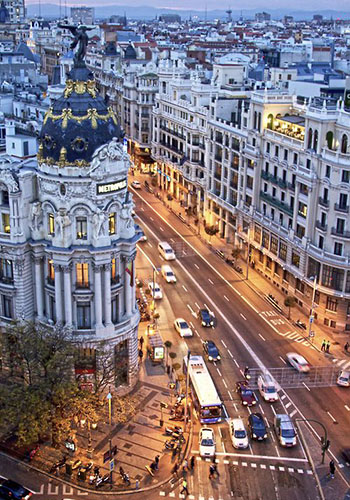
Madrid is a Spain's capital and largest city of the country. It is a modern and noisy metropolis located almost in the center of the Iberian Peninsula. Madrid is the third largest city in the European Union. It is constantly buzzing like a disturbed hive and filled with bustling activities and life that does not stop even at night. The capital of Spain may lack the despair of Barcelona and the charm of Andalusia but the energy and atmosphere of the city, its cultural and artistic heritage is definitely a reason to visit it.
Madrid's architecture is a bit like Paris: wide avenues and beautiful monumental buildings, squares, parks and museums. But despite the rich history there aren't many monuments and symbols unlike Paris, Rome or Barcelona. Madrid can rightly be considered one of the cultural capitals of Europe. Over the centuries the Spanish crown has accumulated masterpieces of art which are now exhibited in numerous museums. The capital of Spain is also famous for its cuisine and nightlife. The concentration of nightclubs (clubs and bars) here is simply outrageous
Madrid is located just northeast of the geographical center of the Iberian Peninsula at the foot of the Sierra de Guadarrama mountain range on the banks of the small river Manzanares. Height above sea level is 667 meters.
The climate is continental with hot dry summers and fairly cool winters. Madrid is much colder than the Mediterranean coast. Winters are sometimes quite cold and snowy. But in general temperatures are always above freezing even in winter.The best time to visit Madrid is spring and autumn. It can be very hot here in summer and quite cool in winter.
The first mention of the city dates back to the 10th century when the Emir of Toledo Mohammed I founded the fortress of Majirit. Around the fortress a small town have grown which in the 11th century was conquered by Alfonso VI. From the name of the old Arab fortress most likely comes the modern name of the city. Until the 16th century, Madrid was a provincial Spanish city, the development of which largely depended on the state of relations between the Arabs and the Spaniards. Everything changed in 1561 when King Philip II moved the capital of Spain here.
The golden age of Madrid came under King Charles III of the Bourbon dynasty. At this time famous architects were invited who significantly changed the look of the city. Madrid received many buildings in the style of neoclassicism and was significantly arranged. In 1808 Madrid was captured by Bonaparte's troops. A few years later the war of liberation began which led to a revolution. Later, Ferdinand VII became King of Spain. Under his daughter Isabella II almost all the city's fortifications and gates were demolished to ensure the rapid growth of the city. Further serious reconstruction of Madrid occurred in the late 19th - early 20th century. The capital of Spain received wide avenues and spacious squares and architecture is performed in a solo Art Nouveau style. In the 1940s many historic buildings and monuments were damaged during the Civil War. After Franco's death and the end of his dictatorship Spain became a constitutional monarchy. Getting to Madrid will not be difficult. It is one of the largest transport centers in Europe. The airport is located 13 km from the center and has four terminals. The most convenient way to get to the historic center are round-the-clock express buses that will take you to the main train station.
Bremen
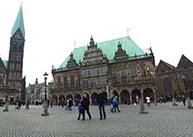
Bremen is a city in northwestern Germany located on the river Weser, 60 km from the North Sea coast. He became world famous thanks to the tale of the Brothers Grimm "Bremen Musicians".
Strasbourg
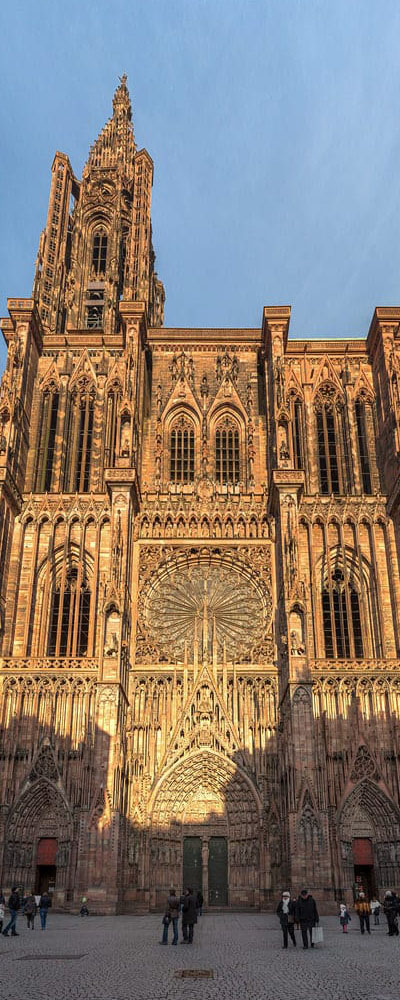
Strasbourg is a city in eastern France, the capital of Alsace and the prefecture of the Bas-Rhin department. It is an ideal stop between France and Germany, surprisingly combining the medieval past and present. Strasbourg is an incredible Gothic cathedral, narrow streets and half-timbered houses of the Grand Elijah, canals and amazing cuisine. In addition the city is the parliamentary capital of Europe (the European Parliament sits here) and one of the largest university centers in France.
Strasbourg is one of the most beautiful cities in eastern France which looks like it came from the pages of fairy tales or fantasy. Its real gem is the old town - Grand Ile. Interestingly, the historic center of Strasbourg was one of the first (among all other European cities) included in the list of UNESCO World Heritage Sites.
Strasbourg is located in eastern France on the banks of the river Ile (west bank of the Rhine) near the border with Germany, between the Vosges and the Black Forest. The city lies on the plains of Alsace and occupies a favorable central position in Western Europe. At the same time, historically and geographically Strasbourg is closer to Germany which leaves some German imprint on it.
The climate is temperate continental with warm summers and fairly cool winters. Despite the fact that the average winter temperature is generally positive, frosts and snowfalls are often possible. Due to the location between the two mountains, Strasbourg is not prone to strong winds.
Verona
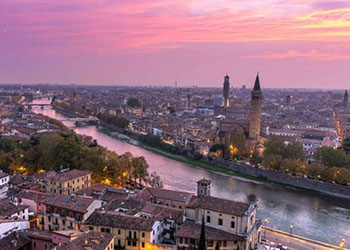
Verona is a city in northeastern Italy on the Adige River in the Venice region. This is an ancient corner of Veneto famous as one of the most romantic places in the world due to the tragedy of "Romeo and Juliet".
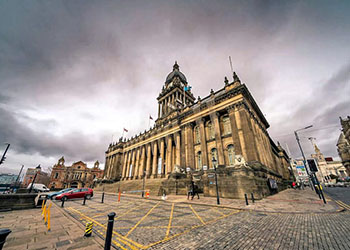
Leeds
Leeds is the third largest city in the United Kingdom, located in Yorkshire. It is one of the largest industrial, commercial and financial centers of the North of England, famous for its excellent shopping,
Next Page »