Turku
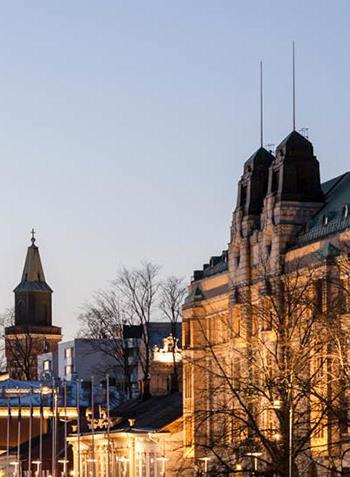
Turku is a port city in southwestern Finland in the province of Varsinais-Suomi. Located at the mouth of the Aurajoki River where it flows into the Archipelago Sea. It is the first capital of Finland (then the capital was moved to Helsinki) and the country's oldest city, founded in 1229, with a beautiful historic center, cobbled streets and old yellow brick buildings.
Geography and climate
Turku is located in the southwestern part of Finland and is considered the "western gate" of the country. The river Aurajoki flows through the city and ends up in Archipelago Sea with many picturesque islands. Turku has a humid continental climate with relatively cold, snowy winters and cool summers.
General information
The airport is located 8 km from the city center and has regular connections with Stockholm , Riga, Alicante, Gdansk. By train you can get to Turku from Helsinki, Kuopio and Tampere . It has a regular ferry service to Stockholm, Sweden, and the Åland Islands.
Shopping centers and areas: Hansa - a large shopping center near the market square, Länsikeskus - a shopping area with supermarkets on the outskirts of the city, Skanssi - a modern shopping center in 20 minutes by bus 9.
History
The valley of the river Aurajoki was inhabited in the pre-Roman period. In the Middle Ages there was a lively trade crossroads. Turku was founded by the Swedes in 1229 and at the end of the 13th century received city status. At this time, the construction of a fortified castle was also started. During Swedish rule, it was called Abo. The new city quickly became the largest and most important city in Finland.
In 1318 Turku was burned by the Novgorodians. In 1509 and 1522 it was plundered by the Danes. In the Middle Ages, the city was built around the cathedral and the Market Square. At the end of the 16th century, during the Russo-Swedish War, Turku was besieged by Russian troops, but was never taken. In the 17th century, the city became the administrative center of Finland and the Finnish Lutheran Church. In fact, Turku was the main Finnish city until 1817, when the decree of the Russian Emperor Alexander I became the capital of Helsinki. In 1827, the strongest fire almost completely destroyed the Old Town. Turku was rebuilt according to the design of Karl Ludwig Engel, who also acted as the chief architect of Helsinki.
Geography and climate
Turku is located in the southwestern part of Finland and is considered the "western gate" of the country. The river Aurajoki flows through the city and ends up in Archipelago Sea with many picturesque islands. Turku has a humid continental climate with relatively cold, snowy winters and cool summers.
General information
The airport is located 8 km from the city center and has regular connections with Stockholm , Riga, Alicante, Gdansk. By train you can get to Turku from Helsinki, Kuopio and Tampere . It has a regular ferry service to Stockholm, Sweden, and the Åland Islands.
Shopping centers and areas: Hansa - a large shopping center near the market square, Länsikeskus - a shopping area with supermarkets on the outskirts of the city, Skanssi - a modern shopping center in 20 minutes by bus 9.
History
The valley of the river Aurajoki was inhabited in the pre-Roman period. In the Middle Ages there was a lively trade crossroads. Turku was founded by the Swedes in 1229 and at the end of the 13th century received city status. At this time, the construction of a fortified castle was also started. During Swedish rule, it was called Abo. The new city quickly became the largest and most important city in Finland.
In 1318 Turku was burned by the Novgorodians. In 1509 and 1522 it was plundered by the Danes. In the Middle Ages, the city was built around the cathedral and the Market Square. At the end of the 16th century, during the Russo-Swedish War, Turku was besieged by Russian troops, but was never taken. In the 17th century, the city became the administrative center of Finland and the Finnish Lutheran Church. In fact, Turku was the main Finnish city until 1817, when the decree of the Russian Emperor Alexander I became the capital of Helsinki. In 1827, the strongest fire almost completely destroyed the Old Town. Turku was rebuilt according to the design of Karl Ludwig Engel, who also acted as the chief architect of Helsinki.