Leeds
Leeds is the third largest city in the United Kingdom, located in Yorkshire. It is one of the largest industrial, commercial and financial centers of the North of England famous for its excellent shopping, close to interesting museums and art galleries as well as numerous parks. Leeds is a pleasant university town with attractive Georgian, Victorian and modern architecture.
Leeds is one of the centers of British shopping. The city is known for its many shops and shopping galleries. The most elegant shops are located in the Victorian Quarter. The Trinity Shopping Mall with many restaurants, shops and a cinema is located on Albion Street. The Kirkgate market in Leeds is one of the largest in Europe.
Leeds is located in the North of England in the west of Yorkshire. The city is located on the River Eyre at the foot of the Pennine Mountains. The climate is temperate with mild summers and cool winters.
History
Leeds was first mentioned in the late 11th century. In 1207 the settlement received the status of a market town. Until the 17th century Leeds was a small town that prospered through the wool trade. With the advent of the industrial revolution begins the era of its prosperity. During this period, Leeds became the economic center of Northern England. Numerous industrial enterprises are being built here. Over the centuries of industrial development the population of Leeds has increased 15 times.
In 1816 the canal was completed, which connected the city with the west coast of England. In 1758 the world's first rail road was built here. Leeds developed before World War II. After the war there was a decline in production, which significantly affected the welfare of the city. Currently only 1/10 of the population is employed in industry.
Monuments
The Civil Quarter is the heart of Leeds with many beautiful Georgian and Victorian buildings, numerous statues, museums and shops.
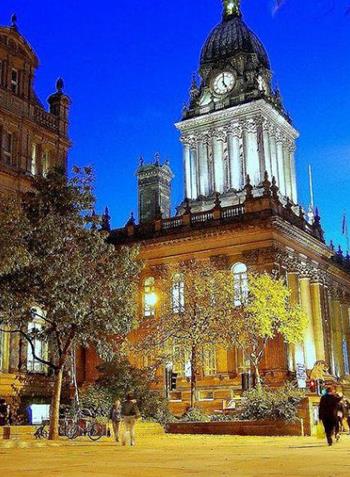
The Town Hall is a magnificent historic building, which is one of the symbols of Leeds. It is considered a masterpiece of Victorian architecture, built in 1858. The town hall is notable for its beautiful Corinthian columns and 61-meter clock tower.
Leeds is one of the centers of British shopping. The city is known for its many shops and shopping galleries. The most elegant shops are located in the Victorian Quarter. The Trinity Shopping Mall with many restaurants, shops and a cinema is located on Albion Street. The Kirkgate market in Leeds is one of the largest in Europe.
Leeds is located in the North of England in the west of Yorkshire. The city is located on the River Eyre at the foot of the Pennine Mountains. The climate is temperate with mild summers and cool winters.
History
Leeds was first mentioned in the late 11th century. In 1207 the settlement received the status of a market town. Until the 17th century Leeds was a small town that prospered through the wool trade. With the advent of the industrial revolution begins the era of its prosperity. During this period, Leeds became the economic center of Northern England. Numerous industrial enterprises are being built here. Over the centuries of industrial development the population of Leeds has increased 15 times.
In 1816 the canal was completed, which connected the city with the west coast of England. In 1758 the world's first rail road was built here. Leeds developed before World War II. After the war there was a decline in production, which significantly affected the welfare of the city. Currently only 1/10 of the population is employed in industry.
Monuments
The Civil Quarter is the heart of Leeds with many beautiful Georgian and Victorian buildings, numerous statues, museums and shops.
The Town Hall is a magnificent historic building, which is one of the symbols of Leeds. It is considered a masterpiece of Victorian architecture, built in 1858. The town hall is notable for its beautiful Corinthian columns and 61-meter clock tower.