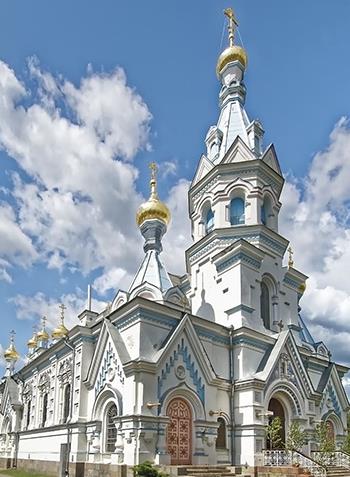
Daugavpils
Daugavpils (is a town in south-eastern Latvia river Daugava. It is the second largest and most important in the country after the capital - Riga . Daugavpils is a modern city, an important educational, tourist and transport center of Latvia.
Geography and climate
Daugavpils is located in the southeast of Latvia near border of Lithuania and Belarus. The river Daugava (Western Dvina) flows through the city. The climate is temperate, but more continental than on the Latvian coast. It is a bit hotter in summer and colder in winter.
History
The foundation of Daugavpils is connected with construction in 1275 of the Livonian castle Dinaburg. After some time the castle was taken and destroyed by the Lithuanians. At the beginning of the 14th century Dinaburg was rebuilt. Later, the castle was significantly expanded and four towers were added to it. At the end of the 15th century, during the Russo-Livonian War, the fortress was taken by Russian troops.
In the second half of the 16th century Dinaburg first became part of the Grand Duchy of Lithuania, but was soon ceded to Poland. In 1577 the castle was taken by the troops of Ivan the Terrible, but then handed over to Poland again.
In the 17th century Dinaburg changed hands several times from Russia to Poland. The city became part of the Russian Empire in the 18th century. In the 19th century it became one of the most important cities in the Baltics. By decree of Emperor Alexander III the city was renamed Dvinsk. The historical name Daugavpils was returned in 1920 which means "castle on Daugava".
How to get there
The nearest airport is in Riga. Currently in Daugavpils there is a project of construction of the international airport. The railway connection is developed with Riga, Gomel, Vilnius, St. Petersburg. By bus to Daugavpils you can get from the capital and other major cities of Latvia. The highway connects the city with Riga, Lithuania and Russia.
Geography and climate
Daugavpils is located in the southeast of Latvia near border of Lithuania and Belarus. The river Daugava (Western Dvina) flows through the city. The climate is temperate, but more continental than on the Latvian coast. It is a bit hotter in summer and colder in winter.
History
The foundation of Daugavpils is connected with construction in 1275 of the Livonian castle Dinaburg. After some time the castle was taken and destroyed by the Lithuanians. At the beginning of the 14th century Dinaburg was rebuilt. Later, the castle was significantly expanded and four towers were added to it. At the end of the 15th century, during the Russo-Livonian War, the fortress was taken by Russian troops.
In the second half of the 16th century Dinaburg first became part of the Grand Duchy of Lithuania, but was soon ceded to Poland. In 1577 the castle was taken by the troops of Ivan the Terrible, but then handed over to Poland again.
In the 17th century Dinaburg changed hands several times from Russia to Poland. The city became part of the Russian Empire in the 18th century. In the 19th century it became one of the most important cities in the Baltics. By decree of Emperor Alexander III the city was renamed Dvinsk. The historical name Daugavpils was returned in 1920 which means "castle on Daugava".
How to get there
The nearest airport is in Riga. Currently in Daugavpils there is a project of construction of the international airport. The railway connection is developed with Riga, Gomel, Vilnius, St. Petersburg. By bus to Daugavpils you can get from the capital and other major cities of Latvia. The highway connects the city with Riga, Lithuania and Russia.